

Maximizing “Energy Intelligence” in Lithium Battery-powered Forklifts
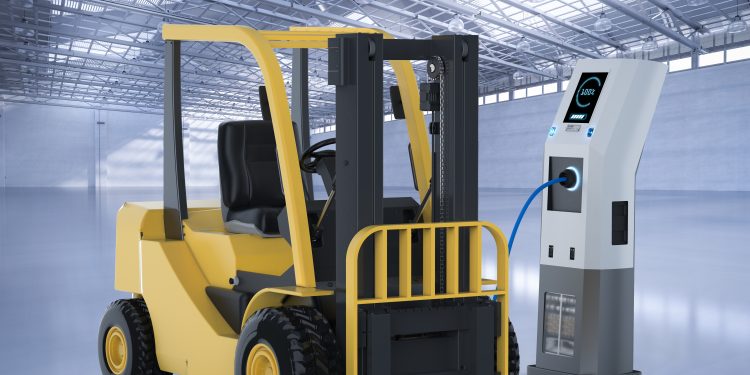
Today’s lithium-powered forklifts collect valuable user data. But are warehouses using it effectively?
Lithium battery-powered forklifts already collect loads of valuable user data. Collectively, this data makes up the battery’s telematics and putting it all together gives warehouse managers an overview of how and when lithium-powered forklifts are working in the facility. However, according to Advanced Energy Council experts, telematics isn’t always used as effectively as it could be. Here we’ll examine the different types of data collected and how it can provide better forklift management.
What Data is Collected?
Today’s lithium-ion batteries essentially act as sensors, providing users with all kinds of information about the battery’s (and the forklift’s) environment. Information includes Electrical/Operational Data (voltage, current, capacity, charge cycles, etc.), Thermal Info (battery temperature, ambient temperature, and temperature across cells), Operational/Environment Conditions (cycle starts, load profiles, charge and discharge), and Degradation (capacity decline, impedance, cycle life, etc.).
Here are descriptions of some of the more common types of data* collected:
- Capacity — how much charge the battery holds, measured in amp-hours (Ah)
- State of Charge — amount of energy available in the battery at any given time
- Use Cycles — tracking the battery’s cycles over its lifespan, used for maintenance and replacement; lithium batteries typically offer 3,000+ cycles of long-lasting life
- CO2 emission savings — calculated using battery data (such as kWh used) combined with other sources, like truck idle time, location, and the type of fuel being replaced; tracks the amount of CO2 the device avoids putting into the atmosphere, used in countries with higher emission standards and sustainability requirements
- Degradation — measuring the decline in a battery’s capacity and efficiency
*This is a partial list. For more comprehensive information regarding battery data collection, contact an AEC member.
When taken together, this information can help managers not only manage the battery throughout its lifecycle, but also run their forklift equipment more efficiently, which can increase overall warehouse efficiency. However, many managers tend to focus on only one aspect of a battery’s performance, depending on their expectations, biases, or agenda. For example, some managers only pay attention to CO2 emissions if they need to follow European environmental requirements. Others might only focus on battery state of charge and whether operators are plugging in to charge, or solely on operational status to learn if a truck needs a new battery. Focusing too much on one area of data doesn’t allow managers to see the whole picture.
Putting It Together
The biggest issue with telematics is keeping track of everything. We get it — It’s a lot of information! However, today’s battery systems make collection and display easier than ever. The key is to make sure you have a system that puts telematics all in the same place. If your data collection systems are stored in different departments (some in maintenance and some in IT, for example), you need to work with an integration systems specialist or your battery and forklift OEM to bring that information into one place. If you are purchasing new lithium-powered forklifts, today’s equipment already has built-in user-friendly data collection platforms making it even easier to know your numbers.
The Benefits of Energy Intelligence
Putting this information together and using it effectively is what AEC members call “Energy Intelligence.” Energy Intelligence is the integration of telematics to optimize lithium battery performance, safety, and usage. It’s a concept already happening in the electric vehicle (EV) space and is now evolving in electric forklifts. AEC industry expert Lucia Salcido of Flux Power says it’s difficult for today’s warehouses to run without it.
“We are seeing a shift in connectivity in the warehouse. The data is increasing available from a battery management perspective,” says Salcido. “On the warehouse side, however, customers are not yet seeing the value of telematics, so a lot of data is still going uncaptured.”
“The benefits are that you’re not operating blind with your assets,” she adds. “You’ll have better operational outcomes, and make better decisions, decisions with data that supports them.” Telematic knowledge not only helps fleet managers oversee the vehicles while they are running, it will help them make major decisions, decisions involving energy consumption, operational costs, managing peak and off-peak times, staffing, fleet size, purchasing, and maintenance. For example, instead of having every single truck in the fleet recharging at the same time, managers can view an individual truck’s state of charge and only charge the trucks that need it, lowering peak power consumption, which is especially valuable for facilities with infrastructure limitations. Another example is using degradation data to know exactly when a battery needs replacing, so businesses only replace individual batteries as needed instead of swapping out an entire fleet at once. The Energy Intelligence you get from telematics will support decisions that affect the bottom line.
What could be more intelligent than that?
Contact an Advance Energy Council member company to learn how battery data collection can support your business.
For more information about the Advanced Energy Council: mhi.org/aec
For further articles from the Advanced Energy Council:
Advanced Energy Council – Partners in Your Electrification Strategy
Opportunity Gained: Busting Old Myths About Advanced Energy Forklifts in Smaller Operations
Lithium-ion Batteries Come Full Circle
Choppy Waters Ahead: Navigating a New Wave of Tariffs
When a Battery Becomes a Razor: Using Lithium-ion Batteries in Peak Shaving Energy Strategies
ICYMI: AEC’s ProMat 2025 Discussion Panel Overview
Second Acts: How Used Lithium-ion Batteries Can Continue Performing in Your Operations
Recalculating: Including Productivity Gains in Total Cost of Ownership

