

Signs You’re Ready for an Automated Warehouse
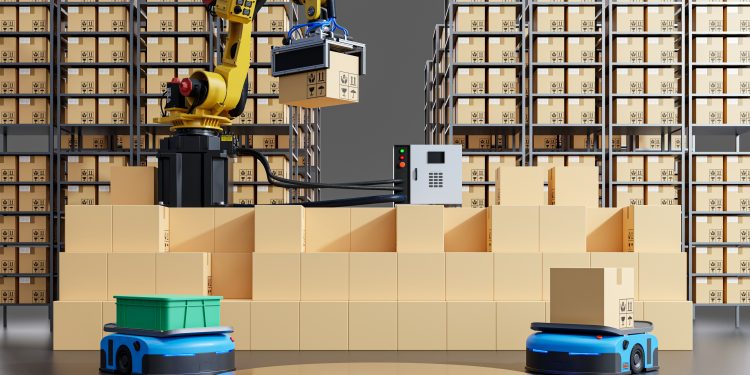
Today’s warehouses are running faster and leaner than ever. SKU counts keep climbing, customers expect faster turnarounds, and the labor market remains tight. For many operations, an automated warehouse has moved from a nice-to-have to a necessity. But committing to an automation project is a major investment, and knowing when your operation is actually ready for it can be the hardest part of the decision.
Before you invest in automation, the real first step is not choosing equipment. It is making sure your processes are clean enough to automate in the first place. You cannot automate your way out of bad practices.
Clean Processes Come Before Automation
Automation is not a fix for broken manual processes. If a process is broken, adding automation to it will not solve the problem. It will scale it. That is why the first step toward automation readiness is a thorough review of your current warehouse operation, processes, and real time data.
Take a company that struggles to store enough goods before loading trucks. On the surface, it looks like a storage or robotics problem. But a closer look at the data often reveals that the real bottleneck is a slow goods dispatch process. Digging into your numbers first shows you where the actual chokepoints are, so you invest in material handling automation where it will make the biggest difference.
Walk through your entire warehouse or distribution center with this mindset. Look for wasted space in static racking, time lost walking to storage areas, recurring stockouts, or missed shipping deadlines. Identifying these pain points, and their root causes, is the foundation every automation decision should be built on.
Set Clear Goals Before You Choose a Solution
Once you know what is causing your problems, translate that into specific goals: a set target to reduce labor costs, hitting a target inventory accuracy rate, or reducing errors in your fulfillment process. Clear, measurable goals are what point you toward the right warehouse automation solutions, rather than the flashiest one.
Start Small and Scale with Modular Automation
One of the biggest misconceptions about warehouse automation is that it has to mean an end-to-end overhaul. In practice, a tiered approach almost always makes more sense. Today’s automated material handling systems are increasingly modular, which means you can start small in one or two areas and expand only once it proves out.
Sortation and automated storage and retrieval are two of the most common starting points, and many storage and retrieval systems can support both, whether through conveyor systems, automated guided vehicles (AGVs), or robotic picking. That flexibility helps reduce the risk of your investment while increasing efficiency across the operation: if robotics does not perform well in one application, you can shift it to the other rather than abandoning the investment altogether.
Most operations end up hybrid for a while, part manual and part automated, and that is normal, since very few move straight into a fully automated warehouse. There will almost always be a need for some manual handling or oversight, so plan for that reality rather than against it.
You also do not need a large capital outlay to get started. Robotics-as-a-subscription models let you try a small number of units, sometimes even a single automated guided vehicle, to test fit and performance before committing further capital. If the pilot proves out, you can invest with confidence and scale cost effectively. If it does not, you have not sunk cash into a project that was not the right fit.
Give the Process Time
Implementing automated systems is rarely instant, and piloting new tools can take months. That is by design, not a delay, and some of this work increasingly relies on machine learning to fine-tune performance as conditions change. Choose a partner willing to invest that time in testing before scaling.
Choosing the Right Automation Partner
There is no shortage of ways to explore automation, and a wide range of partners willing to help. An automation consultant can be a good starting point, but look for one who specializes in your type of operation. A greenfield facility calls for a different specialist than a retrofit, for example.
Systems integrators are another option, and many operate agnostically. Their goal is to get you using automation, generally without steering you toward a specific piece of equipment or vendor. Because of that, they will typically present more than one option.
Going directly to an OEM is also possible, but keep in mind that an OEM has a vested interest in the outcome. If they are recommending a product, it is their own.
Whichever path you choose, the sequence matters: processes first, then decisions, then equipment, including whether a warehouse management system (WMS) needs to be part of the plan. Skip that order, and even the right automation technology will struggle to prove its ROI.
Where to Start
If you are weighing a new material handling automation project, MHI’s Solutions Community is a good place to begin. Its member network can help connect you with the right partners as you take your next step.
Explore MHI’s Solutions Community to connect with warehouse and distribution automation partners.
Contributor: Vishal Ahuja, Beumer
Reviewed by: Solutions Community Marketing Committee
For more information about the Solutions Community: mhi.org/solutionscommunity
For further articles from the Solutions Community:
Electrical Safety in the Workplace: Finger Safe Devices
Conveyor Jam Detection and Prevention: How It Works
Improving Warehouse Labor Productivity with Real-Time Insights
Brownfield Integration Challenges in Warehouse Automation
Warehouse KPI Examples: What KPIs Really Matter?
Is It Time to Upgrade Your WMS Systems?
Peak Season Warehouse Training for Seasonal Employees
Knowing When to Replace Warehouse Automation Equipment