
Improving Warehouse Labor Productivity with Real-Time Insights

Warehouse leaders are under constant pressure to improve productivity while controlling costs and maintaining service levels. Labor shortages make it harder to hire and retain workers, while customer expectations for faster delivery continue to rise. At the same time, operational complexity inside the warehouse continues to increase.
This blog explores how real-time insights, warehouse intelligence platforms, and modern workforce tools can help operations leaders improve productivity. By connecting systems, improving communication between managers and associates, and giving workers clearer feedback and training, warehouses can respond to issues faster and support stronger performance across the operation.
Without real-time data across systems, managers cannot clearly see what is happening on the warehouse floor. As a result, problems often go unnoticed until the shift is over. By then, the opportunity to correct the issue has already passed.
This is why many operations are beginning to adopt warehouse intelligence platforms that connect systems and provide real-time visibility into labor and operational performance.
Why Warehouse Labor Productivity Is Difficult to Improve
Most warehouses rely on several technologies to run daily operations. A warehouse management system (WMS) tracks inventory and orders. Automation platforms monitor robots and conveyors. Labor systems track employee hours and scheduling.
Each of these systems generates valuable data, but they often operate separately.
Managers must move between dashboards and reports to understand what is happening. This fragmented view makes it difficult to diagnose problems quickly or make informed decisions during the shift.
In many warehouses, each system tells only part of the story.
A drop in labor productivity, for example, can come from several causes. Equipment may be down. Picking processes may be unbalanced. Workers may be waiting for new tasks. In some cases, associates may run into obstacles that management cannot see, such as unclear instructions, missing product locations, or workflow bottlenecks.
Without a connected view of operations, identifying the root cause becomes much harder.
Why Real-Time Data Improves Warehouse Performance
Many warehouses still rely on reports generated at the end of a shift to review performance. While these reports provide useful information, they only explain what has already happened.
They do not help managers correct problems while work is still taking place.
Real-time tracking changes that.
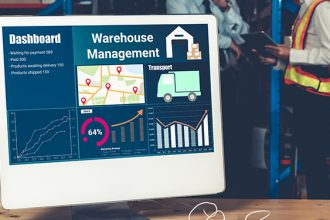
With real-time visibility, operations leaders can see how work moves through the warehouse during the shift. They can detect slowdowns, respond to delays, and adjust labor allocation before productivity declines.
Real-time data allows managers to:
- Monitor throughput against goals throughout the day
- Identify slow processes early
- Detect equipment downtime quickly
- Adjust staffing during peak periods
- Maintain stable warehouse performance
When managers can see performance as work unfolds, they can respond immediately rather than react the next day.
How a Warehouse Labor Management Platform Connects Systems
A warehouse labor management platform helps solve the visibility problem by linking operational systems into one coordinated view of work.
Systems such as the WMS, TMS, ERP, time and attendance platforms, and automation controls all generate valuable data. But this information is often spread across separate tools.
When this data is integrated and standardized, labor activity and workload drivers become much easier to understand in near real time.
Managers can quickly see where associates are assigned, what tasks are in progress, how long work is taking compared with engineered standards, and where bottlenecks are forming across receiving, putaway, picking, packing, and shipping.
This level of visibility improves staffing decisions and allows operations teams to respond faster when conditions change. It also makes productivity reporting clearer and more useful, helping leaders reduce delays, limit overtime, and avoid missed service targets.
Managers no longer need to piece together insights from multiple dashboards. Instead, they can clearly see how labor, automation, and workflows interact across the facility, making it easier to detect performance issues and act quickly.
Improving Warehouse Labor Planning With Real-Time Visibility
Warehouse labor planning is one of the most challenging responsibilities for operations leaders. Demand can change quickly, and small disruptions can affect productivity across the entire warehouse.
Traditionally, labor planning relies on historical data. Managers review previous weeks or months to estimate staffing needs for upcoming shifts.
While this method works in stable conditions, warehouse environments rarely stay predictable. Order spikes, equipment failures, or labor shortages can quickly disrupt the plan.
Real-time visibility allows managers to adapt as conditions change.
Instead of waiting for the next planning cycle, they can make adjustments during the shift. Workers can move between tasks, workloads can be balanced across picking processes, and teams can respond to demand as it happens.
Operations leaders can also cross-train employees so they can support multiple tasks when needed. This flexibility allows the warehouse to operate more efficiently while maintaining service levels.
Why Frontline Workers Drive Warehouse Productivity
Technology alone cannot improve warehouse labor productivity. The people working on the warehouse floor ultimately determine whether operational goals are achieved.
Frontline employees manage picking processes, move products through the facility, and ensure that orders leave the warehouse accurately and on time.
Workers need clear expectations and feedback during the shift. When employees understand how their performance affects warehouse performance, they are better able to adjust their work and contribute to operational goals.
Modern labor platforms help provide this visibility. Workers can see performance updates and understand how their work connects to the broader warehouse operation.
This transparency improves both productivity and engagement.
However, visibility should not only flow from management down to workers. Associates also need the ability to communicate back to supervisors when something on the floor prevents them from meeting performance expectations.
When workers can report issues quickly, managers gain a more accurate understanding of operating conditions and can resolve problems before they affect service levels.
Supporting Multilingual Warehouse Operations
Many warehouse operations employ workers who speak multiple languages. This diversity strengthens the workforce, but it can also create communication challenges.
Clear communication is essential for maintaining safety and productivity. Workers must understand instructions, and managers must be able to receive feedback from the floor.
Many organizations treat language support as a one-way process by translating instructions from management to associates. While that helps, it does not solve the full problem.
Workers also need a way to communicate upstream.
Associates may encounter obstacles that prevent them from working efficiently, such as damaged pallets, blocked aisles, unclear pick locations, or equipment issues. If reporting these problems is difficult because of language barriers, those issues may go unaddressed until they begin affecting performance.
New communication and translation tools are beginning to address this challenge. Voice translation, multilingual prompts, and mobile communication tools can help workers report issues and ask questions more easily.
When built into existing workflows, these tools improve two-way communication between managers and frontline teams. That clarity helps supervisors respond faster and maintain steady warehouse performance during busy shifts.
Using Real-Time Data to Reduce Warehouse Labor Costs Without Sacrificing Service
Warehouse leaders often face a difficult challenge. They must reduce warehouse labor costs without sacrificing service.
Reducing staff rarely solves the problem. Fewer workers can slow fulfillment and increase order errors.
Instead, leaders must focus on improving efficiency throughout the warehouse operation.
Real-time data helps reveal where productivity issues occur. Managers may discover that workers are waiting for tasks, workloads are unevenly distributed, or automation systems are causing delays.
In other cases, the issue may relate to unclear instructions, poor training, or communication breakdowns between teams.
When these issues become visible, leaders can address the root causes rather than simply pushing workers to increase output.
Over time, these improvements reduce operational waste, improve consistency, and create cost savings without lowering service levels. This allows the warehouse to operate more cost effectively while maintaining customer expectations.
The Future of Warehouse Labor Productivity
Warehouse operations continue to grow more complex. Automation, robotics, and analytics tools generate enormous amounts of operational data.
Without the right tools, it becomes difficult to turn that data into actionable insights.
Warehouse intelligence platforms help solve this challenge by connecting systems and providing real-time visibility. Managers gain a clearer understanding of how labor, automation, and workflows interact across the facility.
At the same time, better communication tools and modern training platforms are helping warehouses strengthen collaboration between managers and frontline teams.
When real-time data, two-way communication, and effective training work together, warehouses gain a more complete picture of performance. Leaders can respond faster to problems, support their workforce more effectively, and make better operational decisions during the shift.
As warehouse operations continue to evolve, the organizations that succeed will be the ones that combine technology with stronger communication, clearer feedback, and better support for the people doing the work every day.
Contributor: Glynn LoPresti, TAKT
Reviewed by Solutions Community Software Committee
For more information about the Solutions Community: mhi.org/solutionscommunity
For further articles from the Solutions Community:
Brownfield Integration Challenges in Warehouse Automation
Warehouse KPI Examples: What KPIs Really Matter?
Is It Time to Upgrade Your WMS Systems?
Peak Season Warehouse Training for Seasonal Employees
Knowing When to Replace Warehouse Automation Equipment
Converging IT with OT Strategies
Go-Live Best Practices for Warehouse Automation
From If-Then to Intelligent Agents in Intralogistics Condition Monitoring
Cabinet-Free Warehouse Automation: Modular, Scalable Systems