
Middle East War Disruptions
The supply chain continues to suffer disruptions, and this time from the Middle East war. It’s time to act, and your SLAM line can be part of the plan.
The ongoing conflict in the Middle East is an ever-changing landscape, which can make keeping up difficult. As of this writing, there is a fragile cease fire, but that may change quickly. While there’s plenty of uncertainty in the future of these conflicts, one thing is certain: the supply chain is disrupted and will be for some time to come. The fall out can be widespread, and show up in unexpected places, including your SLAM line operations.
In a growing ecommerce environment, many smaller SKUs—apparel, CPGs, small items—often ship in polybags. One thing warehousing operations may not be considering is that the petroleum industry and its disruptions directly impact the cost to manufacture polybags. Where these costs held steady for 18 – 30 months, in 2026 they began to spike in relation to the Middle East troubles. Polybag makers have increased costs by six percent a month and all the way up to 12 percent, of late. Additionally, we have just been informed that resin could go on allocation. They have informed customers to expect those costs to continue rising each month for the next several months, unless there is a dramatic turnaround in the Middle East political landscape.
Those same polybags are incurring longer order lead times, too. The normal delivery period generally took about 8 weeks. Today, that has extended to 12 to 16 weeks. With uncertainty baked into this equation, there’s no telling when the lead times will return to normal. If you can commit to purchasing a certain volume now, your vendor will likely work to accommodate you. This may require that you create storage space in your DC, but the savings and peace of mind will be worth the effort.
Other changes already underway include the high fuel prices. While a cease fire may provide optimism that fuel will begin falling soon, the reality is that it may remain high for some time. Warehousing operators need to be mindful of this for the long run—transportation companies are going to pass along the costs in the form of surcharges. That has a snowball effect, one that rolls right into right-sized packaging.
If you haven’t invested in automation that can provide right-sized packaging, now might be the best time ever to consider it. As the holidays approach and your demand goes up, your transportation partners will be charging higher rates. A good way to offset those charges is to ensure you’re using the smallest package possible.
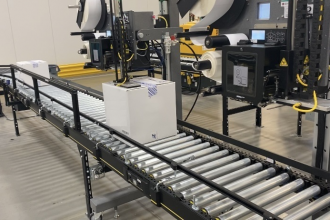
Automated SLAM lines, with their weighing, dimensioning, and other equipment, is a great first step to providing the smallest, best package size for saving on shipping. It will also help you avoid human errors that can lead to costly chargebacks. SLAM equipment can also assist in rate shopping, another good step for cost savings.
Using SLAM equipment, you can feed the numbers from weighing and dimensioning to feed your shipping software. There, the software can determine the best carriers for each package, leading to cost savings.
As with all things related to the current supply chain disruptions, now is the time to consider adding these valuable pieces of equipment. The lead times to receive SLAM automation are growing along with other items, so having a conversation with a qualified integrator or OEM now can help you get your equipment in the pipeline. Prices may also inevitably rise as the disruptions grow. The upside is that investing in SLAM equipment can pay for itself quickly, making your investment well worth its while, especially in these uncertain times.
With all these factors in play, smart operations will begin preparing now for peak season. Much like the pandemic six years ago, consumables are going to take a hit both in price and lead times. If you aren’t planning, you risk either losing customers or hurting your reputation with lower positive reviews. Operate as if the disruptions will last for several months, and maybe even longer.
If there’s a shortage in materials like polybags—which is a realistic scenario, Ecomm consumables will slide downward as a manufacturing priority product, and instead, manufacturers will reserve stocks for companies who provide essential items, like pharmaceuticals and medical devices as they did during the pandemic.
The supply chain has never fully recovered from the pandemic. Six years later, the conflict in the middle east is upending things all over again. The reality is that disruption is more the norm than not, in today’s world.
The companies that act early and prepare well ahead of the upcoming peak season will have peace of mind that they have done everything for a successful peak season.
Ready to take action and begin automating your SLAM line? Your best starting point is the MHI’s SLAM Industry Group.
Contributor: Herman Kuhlendahl, Tension
Reviewed by SLAM Marketing Committee
To learn more about MHI’s SLAM industry group: www.mhi.org/slam
More information about Scanning, Labeling, Applying, Manifesting:
You’ve Looked at SLAM Technology—Now What?
Why WARP Matters in Warehouse Receiving
How to Prepare for Trade Shows
Increased Demand for Robotic Packaging and Solutions
5 Major Reasons Companies are Automating Their SLAM Lines
The Business Case for SLAM Automation
Maintaining Your SLAM Equipment