
Managing Expectations During Warehouse Robotics Implementation
Warehouse robotics can improve efficiency, throughput, and workforce flexibility, but implementation is rarely as simple as installing new equipment and flipping a switch. Successful deployments require coordination across operations, IT, maintenance, leadership, and frontline staff.
Many implementation challenges stem not from the technology itself, but from unrealistic expectations about how robotics systems operate, scale, and deliver ROI. Here are eight common misconceptions companies encounter during warehouse robotics implementation — and the realities organizations should prepare for instead.
Expectation 1): Robotics applications are plug-and-play
Reality: This expectation is found on both sides of the implementation equation because some companies sell their applications as plug-and-play. If your sales team operates in this way, they are doing your business a disservice because if something doesn’t go as planned, your client is going to look to you for answers. If you’re the client, you need to remember that not all warehouses, and not all operations within a warehouse are the same, meaning applications can take different paths to implementation.
Expectation 2): If the technology works, that’s all you need
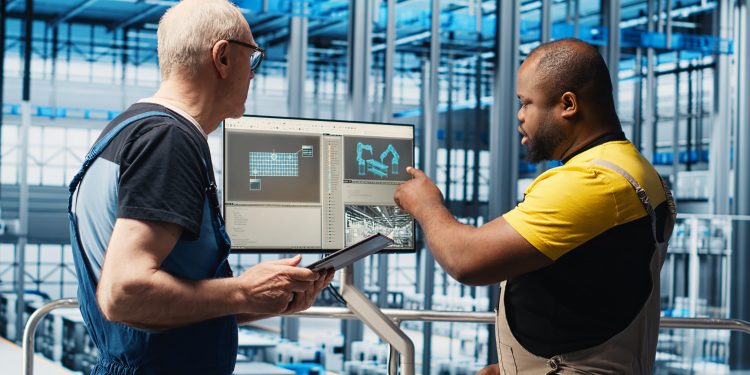
Reality: Robotics implementation is more than just the machines, i.e., the hardware and software. Having technology doesn’t make a warehouse run efficiently. People do. There are the operators who oversee the system and employees who work alongside it. There are the people who maintain it and the IT staff who program it. All these people need training and experience running the application for it to work efficiently. Without people, the technology can’t do much.
Expectation 3): Having robots means less work
Reality: While having warehouse robots can mean fewer physical tasks for human staff, it doesn’t mean that managers and operators can sit back or stop other work aspects in the warehouse. For example, operators still need to run safety checks and still need to oversee what the robots are doing when operating. Managers still need to clean the warehouse floor and secure enclosures because obstacles and messes are just as problematic for robots as they are for humans. Another aspect that can’t be ignored is warehouse planning and strategy. Managers must still do day-to-day planning activities like scheduling maintenance, battery charging, and preparing for peak times.
Expectation 4): Robotics will save on labor/staffing
Reality: While some of the labor force might shrink, other areas could grow. Having robotics doesn’t automatically mean a reduced staff. Even with today’s advances, there are still some warehouse functions that robots can’t perform, or a warehouse may have specialized tasks and applications that require human input. Having warehouse robotics means that you can reallocate the people you already have to work in the areas the robots can’t and you may also need to add skilled technicians and IT staff to ensure the robots function as intended. Often where labor is saved in a warehouse with robotics is lowering the need to hire additional staff for seasonal peaks and during times of employee turnover or if several employees contract the flu. Robotics can help with staffing issues, but won’t eliminate the need for people entirely.
Expectation 5): Quick ROI
Reality: Directional ROI. Because each business ROI case tends to assume perfect application utilization, immediate productivity gains, and speedy ramp up, the first ROI received is often overly optimistic. While the ROI is directionally correct, it often takes longer for the cost savings to catch up with the investment. That doesn’t mean it won’t happen, it will, but robotics implementation and ROI are often a series of stops and starts and not the steady flow seen in ROI charts.
Expectation 6): Warehouse robotics applications are one size fits all
Reality: Robotics applications need to be designed for the specific warehouse they will be installed in and that means taking the physical limitations of your warehouse into consideration. And every warehouse is unique. Your warehouse might have unusually large or unusually small SKUs, or maybe it holds over a thousand different SKUs. Perhaps your products are perishable. And it seems like every warehouse has that one exceptional use function that must be handled by humans. Additional factors: Your warehouse might be a repurposed building with an unusual shape or different ceiling heights. And if the building is over a decade old, its electrical systems might need upgrading. Warehouse infrastructure may need improvement before robotics can even be installed.
Expectation 7): Robotics applications are just another purchase
Reality: Installing robotics in a warehouse is more than an equipment purchase; It involves a change in warehouse culture. That means all levels of warehouse staff, from the employees on the floor to the operators, managers, and technicians to the highest levels of leadership, must be involved in the process. Operators might not trust the system to work. Employees might believe that they are being replaced by machines. Executives might believe the application will solve all their warehouse problems. Like a landscaper buying a self-driving lawnmower, the equipment itself will not create beautiful lawns. How the landscaper views and uses the equipment is what creates beautiful lawns.
Expectation 8): If one thing goes wrong, the entire system is a failure
When people have these unrealistic expectations, if something does go wrong, the entire system is deemed a failure. Rarely is the entire system a failure and that one operational aspect that had trouble can be adjusted. Like most things in life, a positive, proactive mindset makes all the difference when it comes to robotics implementation. If issues are viewed as individual obstacles that can be overcome instead of complete system failures, it will lead to faster resolution if issues do arise.
Think in Terms of Possibilities, not Failures
Organizations that approach robotics implementation with realistic expectations, phased deployment strategies, and a willingness to adapt are more likely to achieve long-term success. Starting small, validating results, and expanding strategically allows companies to build confidence while minimizing disruption and risk.
Reach out to a member of MHI’s The Robotics Group to learn more: mhi.org/trg
For further articles from the The Robotics Group (TRG):
AMHE (Automated Material Handling Equipment) & EU CRA (Cyber Resilience Act)
Things to Consider Before You Automate
Scaling Warehouse Automation: Insights from the Field
From Vision to Reality: Implementing Robotics in the Modern Supply Chain
Maximizing ROI and Mitigating Risks with Robotics