
Converging IT with OT Strategies
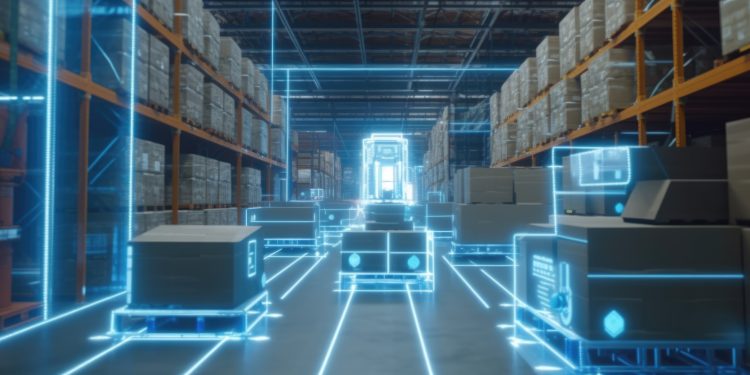
For maximized automation results, adding AI as a bridge between IT and operations is becoming essential in iot ot discussions.
Warehouse automation projects are complex, and for the end user, can sometimes feel overwhelming. After all, not every operation is at the scale of an Amazon or Walmart. Being a smaller facility with more limited resources staring down a new implementation often raises more questions than answers. But working with an integrator or supplier who understands the ins and outs, and most importantly, how to bring your information technology and operational technologies together with the help of AI, can make all the difference.
Understanding IT and OT Convergence and IOT VS OT Considerations
A typical spot for confusion on the automation journey is how and when to bring IT and operations together. Many companies manage this convergence in parts and pieces, but it is more advantageous to do it as a whole. This is where the introduction and advancements in AI are coming to the rescue, especially as more organizations compare iot vs ot and how each influences critical infrastructures.
Legacy Systems and Their Impact on OT Systems and Data Flow
Many companies are still running on old legacy machines or dated WMS systems, if at all. This makes gathering data, analyzing it, and connecting it to new automation components very challenging. Companies focused on inventory management and fulfillment operations can achieve significant gains by better connecting their data to equipment. AI serves as the bridge to that gap, especially as more ot systems and industrial control systems move toward modernized architectures.
Moving Data to the Edge in Operational Technology OT Environments
Before full implementation, companies must identify where their data resides, often buried in legacy systems. Mature organizations move this data to the edge, where it can be processed closer to the source. Integrators play a vital role in optimizing this data flow throughout the ot network.
Once the data is accessible, the next step is to define the desired outcomes. For example, if autonomous mobile robots or vision systems are deployed, edge AI can enhance their performance by aggregating and analyzing local data. This leads to smarter decision-making, reduced latency, and improved coordination inside industrial environments.
Using KPIs to Guide IT and OT Planning in Industrial Environments
Effective KPIs are essential because without understanding what you need to measure, you cannot create an IT and OT convergence plan that drives meaningful gains. This is often a problem with legacy systems because they struggle to support a clear end vision. Understanding the KPIs helps justify the investment in IT. Knowing what is connected, combining it with KPIs, and then adding AI tools to the story can help drive improvements across hardware and software.
For instance, if reducing machine downtime is a priority, AI can analyze edge data to identify patterns and suggest interventions. This supports predictive maintenance, improves uptime, and enhances employee productivity and safety.
Aligning IT and OT to Improve Operational Efficiency
When IT and OT are aligned through AI, manufacturers can address functional challenges with precision and agility. Whether it is improving throughput, reducing waste, or enhancing customer satisfaction, AI provides the intelligence needed to make smarter and faster decisions connected to the physical world.
For more information about the Solutions Community: mhi.org/solutionscommunity
For further articles from the Solutions Community:
Go-Live Best Practices for Warehouse Automation
From If-Then to Intelligent Agents in Intralogistics Condition Monitoring
Cabinet-Free Warehouse Automation: Modular, Scalable Systems
Warehouse Worker Retention: How Automation Reduces Turnover
Post-Installation Training for Warehouse Automation
What Are the Benefits of Supply Chain Towers?
Types of Automation Integrators
Should You Consider Warehouse Automation?