
As Good as New: Installing ASRS in Existing Warehouses Pays Off Over New Builds
As companies look to scale their businesses while adding ASRS technologies to streamline their operations, they often think they need to build new additions or even a whole new facility to get the most out of new technology. Besides, who doesn’t want a shiny new building? However, new doesn’t always mean improved and it certainly doesn’t come cheap.
The main advantage of ASRS is that it can make the most of existing facilities, not only saving companies on the operational costs of warehouse labor, quality control, and time, it can help companies avoid the expensive costs of brand-new construction to begin with.
Lost in Space
According to ASRS estimates[CD1] [CD2] , there is roughly 15 billion square feet of existing warehouse space in the US. Amazon and Walmart alone account for about 600 million square feet. Whether your company has one warehouse or 50, there is existing square footage available for ASRS use.
The US has all this warehouse space because in the past warehouses were relatively inexpensive to build in North America. Vast plots of land were readily available, especially in rural parts of the county, and construction costs for warehouses were considerably less compared to other types of businesses, like office and retail spaces. Today warehouse construction [CD3] [CD4] [DR5] costs have spiked with new builds, including additions to existing buildings, running $50-120 per square foot. Warehouses that require special systems like refrigeration or advanced fire safety can run as high as $150-200 per square foot. These calculations don’t include the additional costs of land acquisition, permits and zoning fees, and utility installation required for new builds. The numbers are high enough to give business owners pause.
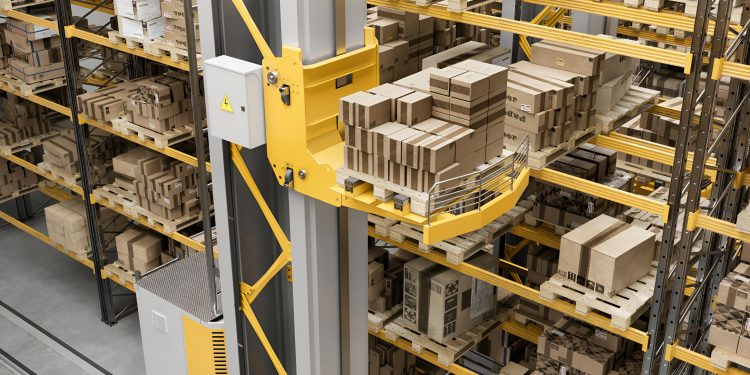
Another important detail to remember is that ASRS utilizes your facility’s vertical space – the building’s cubic footage – creating additional savings from what you already have versus building new. ASRS technology shines in these settings because you don’t need a brand-new or even an empty building to install it.
Creating Workarounds for Busy Warehouses
One of the biggest obstacles to installing ASRS in existing warehouses is concern over how the warehouse will continue operations while the system is being installed. Can your warehouse still function while the installation happens? The answer is yes! ASRS Industry Group members have three types of solutions, depending on an individual business’ needs, size, and flexibility.
1) Using 3PL.
Many maxed out warehouses have already turned to 3PLs for additional storage and/or operations space. Therefore, it isn’t much of a stretch to continue using that 3PL space or even taking on a bit extra while the ASRS is being installed. While there could be a temporary increase in operating costs and storage inconveniences, once the ASRS is up and running, warehouses will have the option to restructure or possibly even reconsider these external relationships[DR6] [CD7] .
2) Phasing Installation.
Often used when converting manual warehouses to ASRS, this method involves consolidating the operations into one area, leaving an empty area for installation. Once that section is done and the ASRS comes online, operations can move into the ASRS area while the former use area undergoes installation. This can be done in as many phases as the warehouse needs, however, most warehouses – especially ones with manual operations – will see that ASRS leaves them with plenty of extra room to operate. For example, a manual warehouse that used five bays to operate may find that ASRS installation allows them to consolidate those five bays into one.
3) Getting Creative.
There is no one-size-fits-all approach when it comes to installing ASRS into existing operations. ASRS vendors will work with their clients to find creative solutions like shifting workloads, performing installations during off-peak periods, or using shipping containers as temporary extra on-site storage. The options here are as vast as your imagination.
The solutions for ASRS installation in the current facility will vary depending on what each individual warehouse does, how many people it has, what types of products they carry, and so on. Sometimes it takes only one installation solution to implement ASRS, or it could take a combination of two or all three solutions. ASRS Industry Group members have extensive experience in formulating ASRS installation plans that allow businesses to continue operations while adding or upgrading an ASRS.
Using What You Already Have
Knowing how much existing warehouse space is available in the US along with the rising costs of new construction, it only makes sense – and saves dollars and cents – to add ASRS to your existing facilities. Not only will you avoid the high costs of construction, but adding ASRS to existing facilities will make your warehouse run better and faster, which makes an old facility outshine any brand-new building.
For more information about the AS/RS group: mhi.org/as-rs
For further articles from the Automated Storage/Retrieval Systems (AS/RS):
Add it Up: The 5 Calculations of ASRS ROI
How ASRS is Changing the Industry for Better
Act Now to Beat Seasonal Order Picking Peaks: Your Complete Guide to Warehouse Success
Adding Robots to the Cold Chain
March 4 MHI Tech Talk Explores Integrating Racks With Automation