

You’ve Looked at SLAM Technology—Now What?
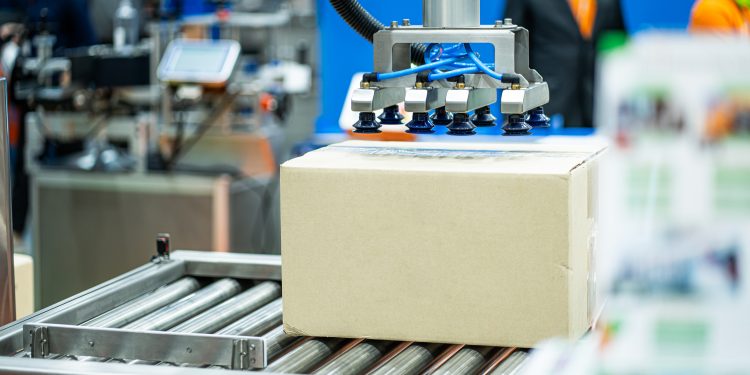
You’re coming off trade show season, and you’ve got several options for improving your SLAM operations. So, where do you go from here?
As trade show season continues and you make the rounds to look for technology solutions, you might be left with a “what’s next?” scenario on your hands. MODEX or other trade shows provide an incredible opportunity to get up close and personal with a wide variety of applications. While kicking the tires and looking under the hood of the various options is enlightening, it can also feel overwhelming—even paralyzing—when it comes time to choose and implement solutions.
This can be especially true with SLAM (scan apply label and manifest) equipment. This end-of-the-line equipment, while low-hanging fruit for automation, is also a critical area of the warehouse. When automation helps streamline the SLAM tasks, it can reduce shipping errors, improve productivity, reduce labor, and add overall more efficiency to your operations.
Your show experience probably involved meeting with multiple equipment suppliers. One of your first tasks is choosing the right one for your operations. It’s essential to vet each supplier carefully, looking for companies with an established track record and proven technology. A show floor is full of new suppliers—especially in the robotics industry—so look for companies that can demonstrate a track record of performance. Ask for references from customers who have partnered with these providers in the past, preferably more than once.
While you’re considering which vendor to partner with, also check to see if their equipment can be scaled with other parts of your operations. If you begin by automating only one piece of the SLAM line, know that in the future, you may want to scale up. Find a partner who can accommodate that step.
This carries out beyond SLAM, however. Because it is the end-of-the-line in the warehouse, SLAM should integrate seamlessly with the equipment and automation that leads into it. If you don’t find a partner who can scale, you may end up with multiple islands of automation, none of which connects seamlessly. This can slow down operations and minimize the benefits you’d get from SLAM automation.
You should also ensure your partner’s software controls are proven and tested. You run a high risk if you choose automation that hasn’t been implemented beyond animated videos. Look for real-world installations and case studies to ensure your dollar spend is proven in actual applications.
Once you’ve narrowed down your list of vendors to about five, you need to ensure you have a handle on your operation’s data, volume, and throughput requirements. These figures will be key in helping your potential vendors prove out that they can work with your operations. Understand factors like whether their solutions can keep up with your requirements well enough to justify their selection. Ensure the partners can integrate and perform using your own real-word data before making any moves.
You’ll want to perform a design engineering study that considers more than a year of your order volumes. Understand your peak and daily volumes and avoid “overdesigning” your automation. Can you run a peak day by simply scaling up shifts or labor? Don’t design your new system on poor data, as this will only lead to poor outcomes from your technology investment.
Drill down with your data, too. What are your labor requirements by task? Consider this for dunnage, the pack sheet, manifesting, weighing, labeling and more. Understand your upstream and downstream capabilities and how they feed into the SLAM line. What are their requirements? How might they integrate with your new SLAM equipment? Then look at options for automation and software in an informed manner.
Another check point is whether potential partners can turn-key your operations with proven automation. If a vendor operates with a series of one-off implementations, or needs to outsource to a local PLC supplier, you’ll probably want them off your list of potential partners. You need a partner who can handle your current volume, as well as your volume in the future.
With all this information in hand, it’s time to compare and contrast the various vendors you’ve had contact with. What options can they offer you for automation and software? What process improvements are they suggesting for your operations? Which blend of solutions offers the best ROI? This should be a collaborative approach that leads to the best match possible.
Once you’ve chosen your partner—but before you sign on the dotted line—ask for a full simulation of their suggested systems to prove the concept. Once you’re comfortable, then it’s time to move forward with that new vendor partner.
Need more help with making SLAM automation decisions? Tap into the SLAM committee at MHI by filing out this questionnaire.
Contributor: Pat Hanrahan, Numina Group
Reviewed by SLAM Marketing Committee
To learn more about MHI’s SLAM industry group: www.mhi.org/slam
More information about Scanning, Labeling, Applying, Manifesting:
Why WARP Matters in Warehouse Receiving
How to Prepare for Trade Shows
Increased Demand for Robotic Packaging and Solutions
5 Major Reasons Companies are Automating Their SLAM Lines
The Business Case for SLAM Automation
Maintaining Your SLAM Equipment
Change Management on the SLAM Line

